
Personalization + Acceleration in Relation to Medical Misogyny
- Abrielle
- Sep 25, 2022
- 2 min read
Medical misogyny is an issue within the medical industry which relates to the mistreatment and ignorance of women's issues. This can pertain to mistreatment of women within gynecological branches of the medical industry, mistreatment of women within standard practice medicine due to them being a woman, and any other mistreatment/ignorance of women's issues within the medical industry.
Personalization is a heavily utilized tool within this branch of activism, born out of necessity as medical misogyny is an issue so deeply ingrained within the medical industry that women's mistreatment goes unreported or swept under the rug. Women sharing their firsthand experiences with medical mistreatment and malpractice is something I have been privy to repeatedly in person in addition to participating by sharing my own experiences, and conducting a search of "medical misogyny" on a social media platform will return many results of firsthand experience.
Acceleration is directly related to the need to share personal experiences as well; as with many activism movements, medical misogyny is a systemic issue that is deeply ingrained within the medical industry, the training of medical professionals, and the way women are treated within society as a whole. By sharing personal experience of mistreatment and the names of hospitals or other medical facilities and the doctors they were mistreated by, other women can avoid patronizing those facilities or find solace in the sense of community created. Once stories start being shared, other women may feel encouraged to share their own stories and social media platforms often see an influx of a topic once it begins to pick up traction.
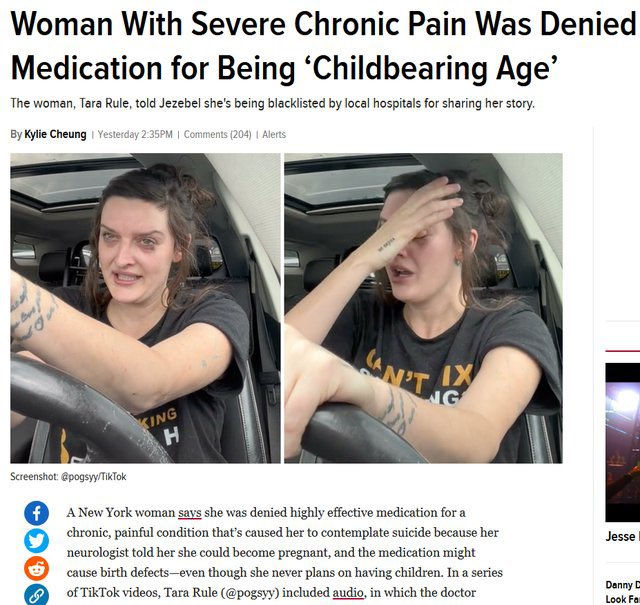
The screenshot above is of an article that shares the story of a woman who was denied pain medication that would treat her highly painful chronic cluster migraines because of the possibility of her getting pregnant at some point in the future. Despite her being on birth control, not having any desire to have children, her partner being willing to get a vasectomy, and her future hypothetical pregnancies having to be terminated due to her high-risk status, the doctor still admitted that she would be prescribed the medication if she were post-menopausal and unable to become pregnant. This is an example of medical misogyny because the rights of a nonexistent fetus are being considered more important than the severe chronic pain that impedes this woman's life, and as a result of her speaking out about it she is being denied medical care from other facilities in her area and threatened with a lawsuit from the hospital she is speaking out against.
Medical misogyny is an issue that affects half of the population, yet is highly underrepresented in mass media outlets, medical research, and medical reports. Women sharing their firsthand experiences of mistreatment cultivates a sense of community and knowledge surrounding the issue, encouraging other women to come forward with their stories and build a wider base of stories to reference. Ideally this sharing of stories will be conducive to a more beneficial medical industry that is catered to women rather than berating and mistreating them, as has been the case historically and currently.
Comments